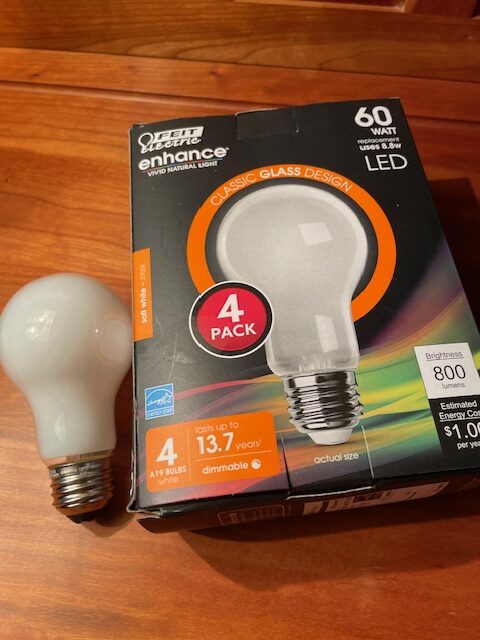
How are LED Lights Different?
LED lighting is very different from other lighting types such as incandescent and CFL. Key differences include:
- Light Source: LEDs are the size of a fleck of pepper, and can emit light in a range of colors. A mix of red, green, and blue LEDs is sometimes used to make white light.
- Direction: LEDs emit light in a specific direction, reducing the need for reflectors and diffusers that can trap light. This feature makes LEDs more efficient for many uses such as recessed downlights and task lighting. With other types of lighting, the light must be reflected to the desired direction and more than half of the light may never leave the fixture. Depending on the LEDs you purchase, you may still need to use light shields for outdoor lighting in order to minimize sky glow.
- Heat: LEDs emit very little heat. In comparison, incandescent bulbs release 90% of their energy as heat and CFLs release about 80% of their energy as heat.
- Lifetime: LED lighting products typically last much longer than other lighting types. A good quality LED bulb can last 3 to 5 times longer than a CFL and 30 times longer than an incandescent bulb.
Are there LED Lights for Under the counter?
Because LEDs are small and directional, they are ideal for lighting tight spaces such as countertops for cooking and reading recipes. Since there can be variation in light color and directionality, it is important to compare products to find the best fixture for your space.
Are there recessed LED Lights?
Yes, recessed downlights are commonly used in residential kitchens, hallways, and bathrooms, and in a number of office and commercial settings. The Department of Energy (DOE) estimates there are more than 600 million recessed downlights installed in U.S. homes and businesses.
Can I buy LED Christmas lights?
Yes, LEDs consume far less electricity than incandescent bulbs, and decorative LED light strings such as Christmas tree lights are no different. Not only do LED holiday lights consume less electricity, they also have the following advantages:
- Safer: LEDs are much cooler than incandescent lights, reducing the risk of combustion or burnt fingers.
- Sturdier: LEDs are made with epoxy lenses, not glass, and are much more resistant to breakage.
- Longer lasting: The same LED string could still be in use 40 holiday seasons from now.
- Easier to install: Up to 25 strings of LEDs can be connected end-to-end without overloading a wall socket.
Additional information can be found Energy.gov LED Lighting and Energy Star Lighting .