
Testimonials
The testimonials below are sorted based on most recent submissions. If you want to look at testimonials about a specific topic, please refer to the testimonials under each action.
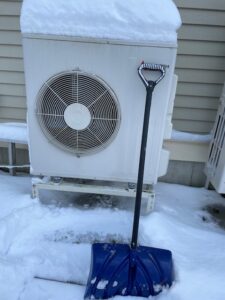
Heat Pumps are great, but some creative thinking required for existing houses
Submitted by: Rick Lent
Our house was 21-22 years old and we knew that the central air system was due for replacement. Then we learned through a webinar that an oil furnace has a typical life span of 25 years. We were interested in heat pumps, but had no idea how they would be installed in our home or what they would cost. Complicating matters was the fact that our house has a challenging layout with some areas not directly connected to others.
We talked with three different contractors who reviewed our house and our needs. We got three very different approaches. But one contractor, Boucher, took the most time inspecting our house and came up with the most innovative and comprehensive plan. Today, our home has three different configurations of heat pumps to cover various different areas of the house.
We have lived with the heat pumps through several heat waves and polar votex events since they were installed. We use our old furnace for back-up when the temperature reaches 15 degress or below which it has on a few days. The systemas have worked very well for us. Our only criticism was the lack of homowner information on how to use the technology. But we eventually found help on line and though Boucher.
Composting – the Easy Way !
Submitted by: Michael Duclos
We purchased a simple home compost bin over a decade ago, which has served use very well. We keep a small bucket under the kitchen sink, into which we put our vegetable scraps, and empty it into the compost bin once or twice a week, enjoying a stroll into the back yard in the process. We turn the compost now and again to facilitate decomposition, no set schedule, just when we feel like it. A couple of times a year we remove the decomposed product and mix in into our garden soil, the worms love it ! The additional organic material helps the garden absorb water when it rains and reduces the need to apply water from our rain barrel. There are no issues with odor or animals at all, I can't smell anything standing right next to it. It's been a great, low effort addition to our home gardening !
Saving Water for a really Green Purpose
Submitted by: Michael Duclos
We purchased our rain barrel through Sustainable Stow when they ran a group purchase in the spring of 2023, and it has substantially reduced the amount of drinking water we use to keep our garden green. It took perhaps an hour to locate the barrel on a pair of concrete blocks to elevate it so we could put watering cans beneath, to cut the rain water diverter into the downspout, and to install a hose from the diverter into the top of the rain barrel, it was an easy DIY project. When we use the rain barrel we hand water with watering cans, so we are more careful with putting the water exactly where the plants need it, so we probably use less water. The summer of 2023 was fairly wet, so we haven't yet experienced a dry summer to see if one rain barrel is enough for what we do, but based on our experience I think it would probably be adequate in all but the dryest summers. It would be an easy matter to add a second rain barrel if we felt the need. Very dry summers have caused both outdoor watering limitations and bans for public water sources, as well as causing private wells to fail, so we feel good about reducing the stress on our potable water supply, and reducing sewer fees that are billed on the basis of potable water use as well.
No Hassle with gas and oil, quiet string Trimming
Submitted by: Michael Duclos
After our third gas powered string trimmer started leaking oil in my basement and refused to start, I decided I had enough of the hassle dealing string trimmers two cycle oil mix and gasoline. I have a fairly large yard (over 3/4 of an acre) with a fair bit of trimming to do, so I invested in a quality battery powered string trimmer with all the 'bells and whistles' including auto line feed and self loading of the string trimming line, along with a substantial battery. It has been a real pleasure to use, there is no running out to get more gas or two cycle oil, no mess of mixing fuel and oil, etc. The battery has a charging cradle, when I'm done I just slide it in, and it runs the charging cycle. The trimmer is super quiet, there is just the sound of the string spinning around, no loud gas engine, no noxious fumes or odor. It is also super powerful, I turned it down to the low setting and that is more than enough for fairly thick weeds. I'm really pleased with how well it performs, and the only thing I'd consider doing differently is to get a smaller battery. The battery I have is fairly heavy, I could easily use one with 1/2 the capacity. One strategy I use is to do a bit of lawn mowing, then take a break from that to do string trimming, then go back to finish the lawn mowing while the string trimmer battery recharges, it just takes a few seconds to put it on the charger. Since the battery charges so quickly, I think I could get away with a battery perhaps 1/4 the size of what I have, doing half the string trimming, then mowing half the lawn while it charges, then finishing the lawn mowing while the battery is charging a second time, that would make the string trimmer a LOT lighter, since a large part of the weight is the battery. A smaller battery would also reduce the first cost, since the battery cost is a large fraction of the purchase. Best of all is since we have in Hudson Light and Power a very progressive utility company, I received a $40 credit toward my electric bill !
Cheap and efficient heating and cooling
Submitted by: Daniel Ladd
I installed a geothermal heating and cooling system through Dandelion Energy and its absolutely fantasitic! I previously had an oil furnace and an old air conditioner and was able to replace both with a geothermal heat pump. Geothermal heat pumps are vastly more efficient than nearly any other heating and cooling option, and because they use the temperature gradient of the soil (usually in the 50 degree range) their efficiency doesn't decline during intense cold snaps like air source heat pumps do. Thanks to the Inflation Reduction Act, you will qualify for a 30% tax rebate off the cost of your geothermal install, and Hudson Light and Power has increased their Geothermal rebates to $1,750. Additionally with the relatively low electricity rates we get from Hudson Light and power, the savings for switching to a heat pump (both geothermal and air source) are great!
Just to walk through the math briefly:
1 gallon of heating oil contains 138,500 btus
1 kilowatt hour (kwh) of electricity produces 3,412 btus
A geothermal heat pump has a coeffcient of performance of ~3-5 (air source heat pumps vary between 2-4) which means that for every 1 kwh of electricity, a heat pump will produce 4-5 times the equilivent heat (or cooling) as heat pumps move heat instead of creating it (just like how your fridge/freezer moves heat from inside the fridge to the outside back of the fridge).
As such, a heat pump will require ~10 kwh to produce the same heat as a gallon of heating oil (138,500/(3,412*4)=10.14)
Given that Hudson Light and Power's $/kwh is around $.12-.13 this means that using a heat pump to heat your home will be cheaper than oil as long as the price of heating oil is less than $1.27. The last time heating oil was that cheap was in 2002! Plus electricity prices are much less volatile than heating oil costs (remember winter 2022?) so you can budget much easier for how much heating is. And on top of all the heating cost savings, geothermal heat pumps are more than twice as efficient (and twice as cheap to run) as a regular air conditioner!
All together, there's almost no reason anyone in Stow should stay on oil heat. Switch to a geothermal (or airsource) heat pump and start the savings! Plus there's no worry about checking to make sure you have enough oil for a cold snap, paying large lumpy bills in the winter, or worrying about any potential oil leaks. Plus its better for your local environment (not great breathing in any oil fumes/smoke) and the overall environment (hudson light electricity is mostly nuclear). Its a win-win-win!
Sources:
https://www.eia.gov/energyexplained/units-and-calculators/british-thermal-units.php
https://geocomfort.com/residential-products/item/navigator-yt (geothermal heat pump installed by Dandelion)
https://www.eia.gov/dnav/pet/hist/LeafHandler.ashx?n=PET&s=W_EPD2F_PRS_NUS_DPG&f=W
FYI for Stow, geothermal heat pumps might make more sense than airsource heat pumps for the sole reason that you don't qualify for MassSave rebates in Stow, but you do qualify for the federal geothermal 30% rebate. A lot of air source heat pump installers aren't aware that Stow doesn't qualify for MassSave, so they will sometimes count the $10,000 rebate. In Stow we get the $1,250 rebate from HDLP. For people who live in a MassSave town, an airsource heat pump might be better (but you'll pay eversource/national grid much higher electricity costs).